
CanJS: The New Hot Thing in JavaScript Development
Reviewing Tibet Silver Beaded Bracelet (ID: 1098) - Available for $16.89.
Featured Snippet Summary: CanJS is a modern, lightweight JavaScript framework designed to simplify complex web application development. Created by Bitovi, it allows developers to write approximately 20% less code by providing highly intuitive data binding, logical structure, and robust templating features, making it one of the most efficient tools in the modern developer's ecosystem.
Overhearing the Silicon Valley Buzz About CanJS
So it is completely official. I was recently spending some time at a Hare Krishna Temple located right in the heart of Silicon Valley. And while I was relaxing a bit, trying to disconnect from the digital noise, I overheard another pair of software engineers passionately talking about their current tech stack. I really could not help but eavesdrop on their highly technical conversation, given how enthusiastic they sounded about their current projects.
To my absolute surprise, they were engaged in a deep discussion about CanJS. One of the engineers was completely raving about it to the other one, praising its architectural elegance, modularity, and overall simplicity. Finally, the professional curiosity got the better of me, and I simply had to politely inject myself into the conversation to inquire as to where they worked and what complex systems they were building with these tools.
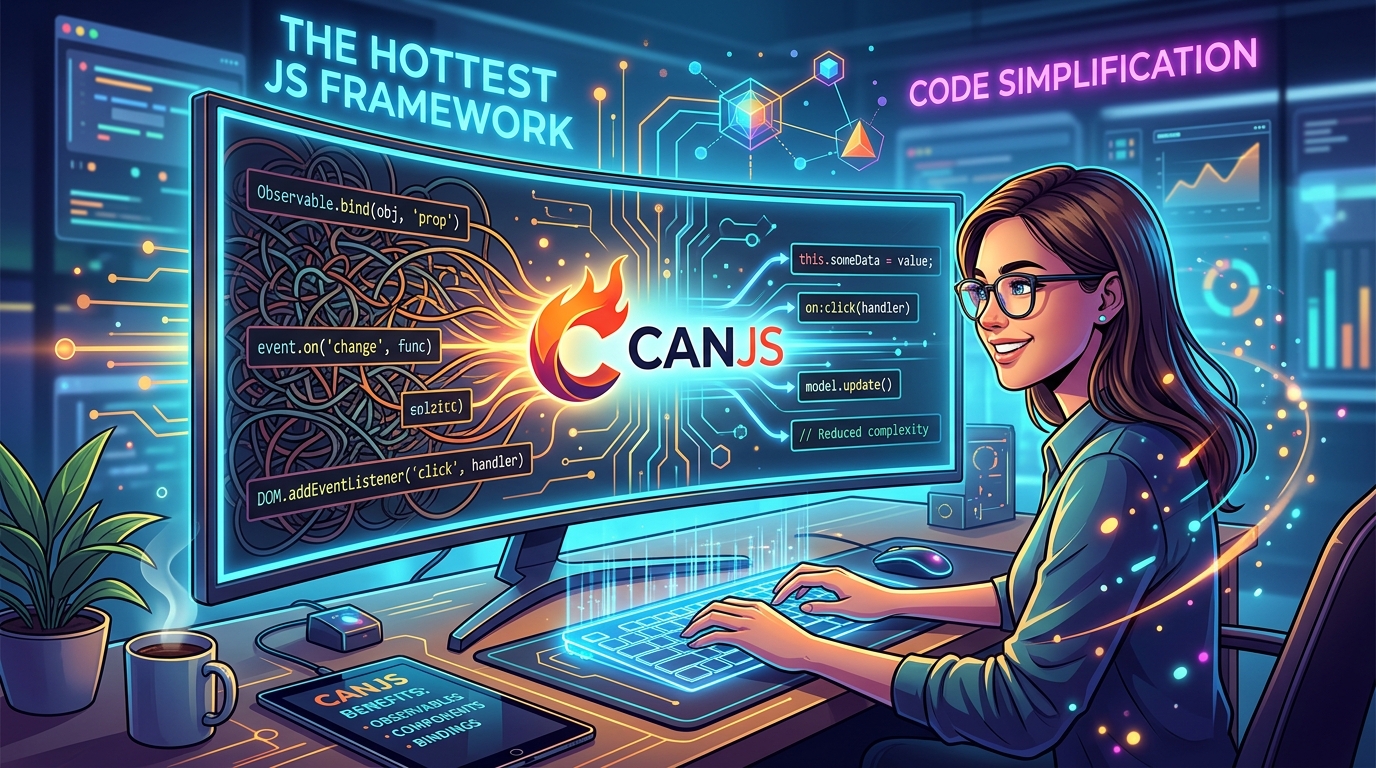
Why Startups are Choosing CanJS over Heavyweight Alternatives
And again, to my surprise, they did not work at a massive, ubiquitous tech conglomerate, but rather at an agile, fast-paced startup. Bitovi is a name I am hearing more and more frequently while I am up here in Silicon Valley! Their overarching influence on the open-source community is becoming increasingly apparent as more developers discover the tangible benefits of their robust ecosystem.
Why is CanJS capturing the attention of so many talented front-end developers? The simple, straightforward answer is that it makes complex programming tasks exponentially easier. You just have to write way less code. On average, developers report writing about 20% less code to achieve the exact same functionality when compared to alternative, more verbose frameworks like Angular or React. This massive reduction in boilerplate code is an incredible win for team productivity, long-term project maintainability, and minimizing technical debt.
Organizing Code with Unparalleled Logical Structure
Beyond simply reducing the sheer volume of lines you have to write, CanJS also fundamentally organizes your codebase into a vastly better, more logical, and therefore highly readable structure. When you are scaling an application to accommodate thousands of active concurrent users, having an intuitive architecture is completely non-negotiable. It effortlessly separates concerns, binds data seamlessly to the Document Object Model (DOM), and provides a crystal-clear path for predictable state management across various application components.
This unprecedented level of organization actively prevents the dreaded "spaghetti code" that plagues so many legacy applications, allowing new developers to onboard quickly and begin contributing meaningful, bug-free features almost immediately. Because it relies heavily on standard HTML and pure JavaScript paradigms rather than proprietary syntax, it drastically reduces the initial learning curve for junior engineers while offering deep customization for senior architects.
The Legacy of JavaScriptMVC and the Bright Future Ahead
So yes, a massive thank you is unequivocally owed to Brian Moschel, not just for his pioneering, groundbreaking work on JavaScriptMVC, but for the refined, modernized execution of CanJS. Building upon the critical lessons learned from earlier iterations of JavaScript development tools, they have crafted something truly special that deeply resonates with front-end engineers who value clean architecture and performance.
They are unequivocally the "IT" thing in Information Technology this year. Whether you are building a real-time analytics dashboard, an interactive high-traffic e-commerce platform, or a complex data visualization tool that requires high-frequency updates, this framework provides the essential performance, memory safety, and flexibility required to succeed in today's highly competitive digital landscape.
Frequently Asked Questions About the Framework
What are the core benefits of using CanJS?
The primary advantages include a significantly smaller initial download footprint, robust memory safety features to intelligently prevent memory leaks, live observables binding that automatically updates the user interface when underlying application data changes, and comprehensive unit testing utilities built right into the core architecture.
Is it suitable for massive enterprise applications?
Absolutely, without question. Because it strictly enforces a rigorous separation of concerns and provides scalable, battle-tested architectural patterns out of the box, it is highly suitable for large-scale enterprise applications maintained by distributed teams across multiple continents.
How does it integrate with existing legacy projects?
One of the absolute strongest selling points is its entirely unobtrusive nature. It can be easily dropped into an existing, aging codebase without ever requiring a massive, risky complete rewrite. This allows development teams to migrate incrementally and safely, testing new components alongside legacy code.
Royal Adornments & Historical Gemology Curatorial Board
Our curatorial panel researches historical royal provenance, antique lapidary cuts, precious metal hallmarking archives, and scientific gemological origins.
Researching Antique Jewelry Provenance?
Consult our historical hallmark archives, period maker records, and gemological monograph collection.