The Romantic History of the Heart Pendant
Tracing the symbol of love in jewelry from medieval asymmetric brooches to Victorian sentimental tokens.
The Romantic History of the Heart Pendant
The heart pendant is perhaps the most universally recognized symbol of love, affection, and devotion in human history. Tracing its evolution reveals a rich and surprising journey from medieval asymmetric brooches to intricate Victorian sentimental tokens and modern sterling silver masterpieces. Discover the fascinating origins and timeless appeal of the heart motif in fine jewelry.
The Universal Symbol of Affection and Devotion
Throughout the centuries, humans have sought tangible ways to express intangible emotions. The heart pendant emerged as a definitive physical manifestation of these profound feelings. From ancient conceptualizations of the human heart as the center of emotion to its stylized depiction in art and jewelry, the heart motif has transcended cultural boundaries. When you gift or wear a heart pendant today, you are participating in a tradition that spans hundreds of years, connecting modern romance to historic courtly love.
Before the shape was formalized into the symmetrical scallop we know today, the human heart was often depicted in medical and philosophical texts quite differently. However, artists and jewelers sought a simplified, elegant form that could be easily crafted from precious metals. This pursuit of a universally understandable icon gave birth to the stylized heart, a symbol that continues to dominate the jewelry industry globally, representing not just romantic love, but familial bonds and deep friendship.
Medieval Origins and Courtly Love Tokens
The stylized heart shape we recognize today first began appearing prominently in jewelry during the 14th century. During the medieval period, the concept of "courtly love" flourished among the nobility. Knights and lords would exchange early medieval brooches and pendants shaped like hearts with their ladies as secret tokens of affection and devotion.
Interestingly, these early hearts were often asymmetric, bearing a stronger resemblance to a pear, a fig, or an ivy leaf rather than the perfectly symmetrical icon we know today. These early pieces were deeply personal, frequently engraved with romantic inscriptions in Old French, known as "posies." These hidden messages allowed lovers to communicate their feelings discreetly, making the jewelry incredibly intimate and sentimental. The craftsmanship of these early pieces laid the foundation for the sentimental jewelry traditions that would follow in subsequent centuries.
The Renaissance and Victorian Sentimental Jewelry
As the Renaissance swept across Europe, the design of the heart pendant evolved. The shape became more symmetrical and refined, incorporating intricate goldsmithing techniques and colorful enamel work. However, it was during the Victorian era that sentimental jewelry truly reached its zenith. Queen Victoria's deep love for her husband, Prince Albert, popularized jewelry that expressed familial and romantic affection, turning sentimental pieces into a massive cultural phenomenon.
During this period, the heart motif became a staple of romantic expression. Jewelers began to heavily embellish heart pendants with precious gemstones, each carrying its own secret meaning. Seed pearls were often used to represent tears, turquoise to symbolize true love and protection, and deep red rubies to represent passionate devotion. Lockets shaped like hearts also became incredibly popular, allowing the wearer to keep a lock of hair or a miniature portrait of their loved one close to their own heart at all times. This era cemented the heart pendant as the ultimate romantic gift.
Modern Interpretations: A Timeless Gift
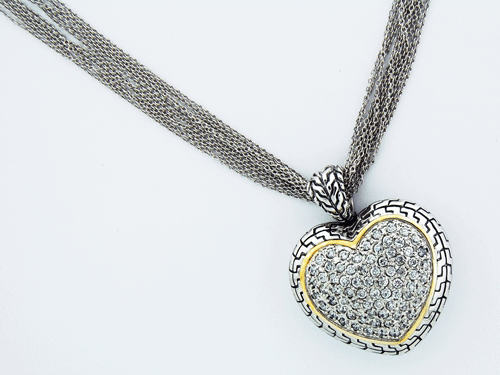
Today, a sterling silver heart pendant remains the quintessential gift of affection, adapting to contemporary aesthetics while retaining its historical significance. Modern jewelry designers have reimagined the heart in countless ways—from sleek, minimalist polished surfaces to elaborate designs featuring intricate scrollwork and dazzling pave diamond accents. The versatility of the design ensures that it appeals to a wide range of tastes, from those who prefer understated elegance to those who love glamorous statement pieces.
Whether it is given for an anniversary, Valentine's Day, a birthday, or simply "just because," the heart pendant continues to serve as a beautiful, enduring way to carry a token of love close to one's chest. Its simplicity ensures that it complements any personal style, making it a versatile and cherished addition to any jewelry collection. As materials and techniques continue to evolve, the underlying message of the heart pendant remains beautifully unchanged.
Frequently Asked Questions About Heart Pendants
When did the heart shape first appear in jewelry?
The heart shape first began appearing in jewelry in the 14th century during the medieval period, often as asymmetric brooches exchanged by nobles as tokens of courtly love.
What did early medieval heart pendants look like?
Early medieval heart pendants were typically asymmetric, resembling a pear or a leaf, and were frequently engraved with romantic French inscriptions expressing devotion.
How did Victorian jewelry utilize the heart motif?
During the Victorian era, heart motifs were heavily embellished with precious gemstones like seed pearls, turquoise, and rubies. Heart-shaped lockets also became incredibly popular for holding portraits or locks of hair.
Why are heart pendants so popular today?
Heart pendants remain the quintessential symbol of affection and devotion. They serve as a timeless gift, representing enduring love that people cherish holding close to their hearts.
This historical artifact is inspired by a piece in our modern catalog.
View Product on AStoreForBeauty →Royal Adornments & Historical Gemology Curatorial Board
Our curatorial panel researches historical royal provenance, antique lapidary cuts, precious metal hallmarking archives, and scientific gemological origins.
Researching Antique Jewelry Provenance?
Consult our historical hallmark archives, period maker records, and gemological monograph collection.