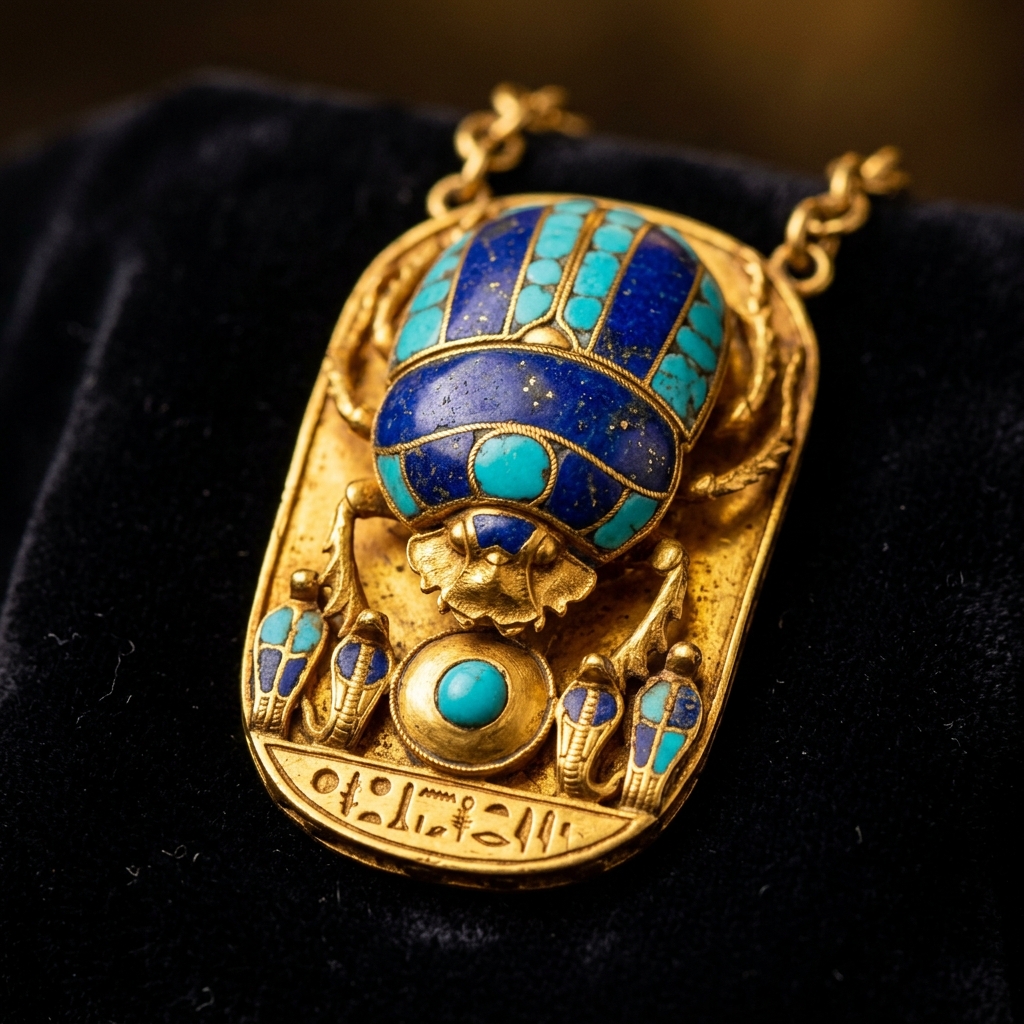
Estate Jewelry Valuation: Archival Provenance, Maker's Marks & Sotheby's/Christie's Cataloging
A curatorial guide to valuing signed estate jewelry, analyzing archival provenance ledgers, French maker's poinçons, alteration forensics, and auction cataloging.
In the rarified realm of historic estate jewelry, intrinsic gemological weight is merely the starting point of valuation. When premier international auction houses such as Sotheby's and Christie's catalog fine period jewels, the ultimate hammer price is governed by an intricate confluence of archival provenance, master goldsmith poinçons, untouched original condition, and period documentation. A signed Art Deco bracelet by Cartier or an avant-garde sculpted cuff by Suzanne Belperron can realize ten to twenty times the raw market value of its constituent platinum and diamonds. Understanding how auction specialists appraise these heirloom artifacts requires decoding maker signatures, archival ledgers, and forensic condition reports.
The Anatomy of Provenance: From Royal Vaults to the Rostrum
In estate jewelry appraisal, "provenance" denotes the documented chain of ownership from the moment a jewel departed the jeweler's workbench to its current consignment. Historic ownership by royalty, Gilded Age dynasties, or legendary collectors imbues a jewel with intangible cultural capital. Landmark sales—such as the 1987 Sotheby's Geneva auction of the Duchess of Windsor's collection or the 2011 Christie's New York sale of the Elizabeth Taylor jewels—demonstrate that prestigious provenance creates unprecedented bidding momentum, routinely shattering high presale estimates by multiples of five or ten.
Auction catalogers verify provenance through rigorous archival research. High jewelry maisons, including Cartier (Paris, London, New York archives), Chaumet, Boucheron, and Van Cleef & Arpels, maintained meticulous hand-written stock books, custom order ledgers, and gouache design rendering albums. When a piece can be paired with an original stock inventory number—scratched or stamped microscopically onto the gallery of a mount—specialists can consult the maison's heritage department to confirm the client who commissioned it, the date of delivery, and the exact original gemological specifications.
The Connoisseur's Enigma: The Unsigned Brilliance of Suzanne Belperron
While maker signatures generally command premiums, one celebrated master famously defied the practice: Suzanne Belperron (1900–1983). Considered one of the twentieth century's most influential jewelry visionaries, Belperron pioneered carved chalcedony, rock crystal, and smoky quartz mounts set with precious gems. When asked why she refused to stamp her creations, she famously replied, "Mon style est ma signature" ("My style is my signature"). Because her jewels bear only French assay marks and the maker's mark of her manufacturer, Société Groëné et Darde, authenticating a Belperron piece requires forensic stylistic comparison and official certification from the Belperron archival committee led by Olivier Baroin, who holds her original client order books.
Maker's Marks, Poinçons de Maître & Workshop Ledgers
A maker's mark is an indelible signature stamped into the noble metal substrate. In historic jewelry capitals, most notably Paris, goldsmithing guilds operated under stringent statutory controls. In France, every manufacturing workshop was legally required to register a unique poinçon de maître (master's mark)—typically an incuse lozenge containing the jeweler's initials and a distinct symbol or rebus.
Crucially, historic luxury houses frequently subcontracted the fabrication of their most complex jewels to independent master workshops. For instance, the legendary workshop of Georges Lenfant produced breathtaking woven gold mesh and articulated links for Cartier, Hermès, and Vacheron Constantin. Identifying a Lenfant lozenge mark alongside a retailer signature adds tremendous artisanal prestige. Auction catalogers inspect these marks under high-magnification binocular gemological microscopes, checking for crisp strike borders, assay control punch contours, and correct metal fineness marks (such as the French eagle's head for 18K gold or the dog's head for 950 platinum).
| Historic High Jewelry Maison | Signature Style & Hallmarking Characteristics | Associated Workshop Poinçons | Primary Auction Valuation Drivers |
|---|---|---|---|
| Cartier (Paris, London, New York) | Engraved cursive signature, individual inventory stock numbers | Georges Lenfant, Edmond Henri & Cie, Lavabre | Art Deco Tutti Frutti, Egyptian Revival, and mystery clocks with archival confirmation |
| Suzanne Belperron | Unsigned; certified exclusively via archival sketch records | Société Groëné et Darde (lozenge with 'GD' and a heart) | Carved hardstone cuffs, tactile sculptural volumes, verified Baroin certificates |
| René Boivin | Often unsigned or stamped 'R. BOIVIN'; designed by Jeanne Poire | Louis Boivin, various Parisian atelier lozenges | Chameleon brooches, articulated starfish, bold carved wood and gold naturalist forms |
| Van Cleef & Arpels | Block or cursive engraving, 'V.C.A.' abbreviation, stock number | Péry & Cie, Verger Frères, Rubel Frères | Serti Mystérieux (Mystery Set), Zip necklaces, Minaudières in pristine condition |
| Jean Schlumberger (Tiffany & Co.) | 'Tiffany & Co. Schlumberger' or 'Schlumberger Paris' | French workshop marks for Paris productions; 18K/Pt | Paillonné enamel bracelets, Bird on a Rock brooches with untreated colored gems |
Condition Reporting Forensics: Identifying Alterations & Marriages
Before an estate jewel appears on the auction podium, specialists compile an exhaustive condition report. In vintage and antique jewelry, condition is evaluated through a strict conservation lens, differentiating between natural patina and damaging intervention:
1. Detecting Lead Solder & Laser Repairs
Amateur repairs often involve low-temperature lead or tin solder applied to fix cracked platinum galleries or broken hinges. Lead solder permanently ruins the value of a noble metal jewel; it discolors the metal, cannot be polished out without eroding fine millgraining, and contaminates the platinum alloy if laser-welded later. Connoisseurs prize jewels with crisp, unmolested openwork.
2. Replaced Gemstones & "Marriages"
A critical forensic step is verifying that gemstones are original to the piece. If an Art Deco brooch crafted in 1925 features a central Old European cut diamond surrounded by modern round brilliants with laser-inscribed girdle serial numbers, the specialist notes the later replacement. Worse still are "marriages"—composite pieces created by combining components from two damaged antique jewels (such as mounting a Victorian brooch element onto a twentieth-century bracelet shank). Unaltered original architecture always commands maximum collector interest.
3. Metal Alteration & Over-Polishing
Aggressive wheel polishing removes delicate surface metal, blurring engraved maker signatures, softening crisp hand-cut millgrain edges, and eroding the French assay marks. Pristine jewels retain their microscopic hand-tooling marks, displaying a soft, warm vintage patina rather than an artificial mirror shine.
The Valuation Multiplier: Period Fitted Cases & Ephemera
The presence of original period ephemera significantly enhances an estate jewel's desirability and hammer price. A custom fitted presentation box crafted from Moroccan leather, shagreen, or silk velvet—embossed in gold leaf with the jeweler's historic street address (such as Cartier's 13 Rue de la Paix or Boucheron's 26 Place Vendôme)—acts as tangible provenance. Beyond boxes, original hand-written invoices, gouache presentation renderings, insurance appraisals signed by the master jeweler, and period society photographs depicting the original owner wearing the piece serve as unimpeachable historical validation.
Independent Laboratory Origin Certification
For high jewelry featuring premier colored gemstones, auction houses require origin and condition reports from world-renowned independent gemological laboratories—most notably the Swiss Gemmological Institute (SSEF), Gübelin Gem Lab, and the Gemological Institute of America (GIA). A vintage Kashmir sapphire ring or Colombian Muzo emerald brooch cannot achieve top tier estate pricing without laboratory documentation certifying the absolute absence of thermal treatment, glass filling, or artificial clarity enhancement.
Frequently Asked Questions
Why does signed estate jewelry sell for significantly more than unsigned pieces?
Signed jewels from historic houses like Cartier, Van Cleef & Arpels, or Boucheron represent superior craftsmanship, rigorous gemological selection, and recognized design heritage. A verified maker's signature confirms authenticity, guarantees secondary market liquidity, and connects the jewel to documented archival records, creating substantial collector demand that far exceeds raw material costs.
How can a collector authenticate an unsigned Suzanne Belperron jewel?
Because Suzanne Belperron never signed her work, authentication relies on three factors: identifying her distinctive sculptural design vernacular (carved hardstones, bold volumes), locating the maker's mark of her manufacturer (Société Groëné et Darde) alongside French assay marks, and obtaining an official certificate of authenticity from the Belperron archive led by Olivier Baroin, who maintains her personal client order registers.
What is a French "poinçon de maître," and why is it important in cataloging?
A poinçon de maître is a master goldsmith's workshop mark required by French statutory law. Formatted as an incuse lozenge containing initials and a unique symbol, it reveals the specific atelier that manufactured the piece. Because top houses often commissioned elite independent workshops (such as Georges Lenfant or Péry & Cie) to execute their most demanding designs, the poinçon provides vital insight into the jewel's authentic craftsmanship.
Royal Adornments & Historical Gemology Curatorial Board
Our curatorial panel researches historical royal provenance, antique lapidary cuts, precious metal hallmarking archives, and scientific gemological origins.
Researching Antique Jewelry Provenance?
Consult our historical hallmark archives, period maker records, and gemological monograph collection.