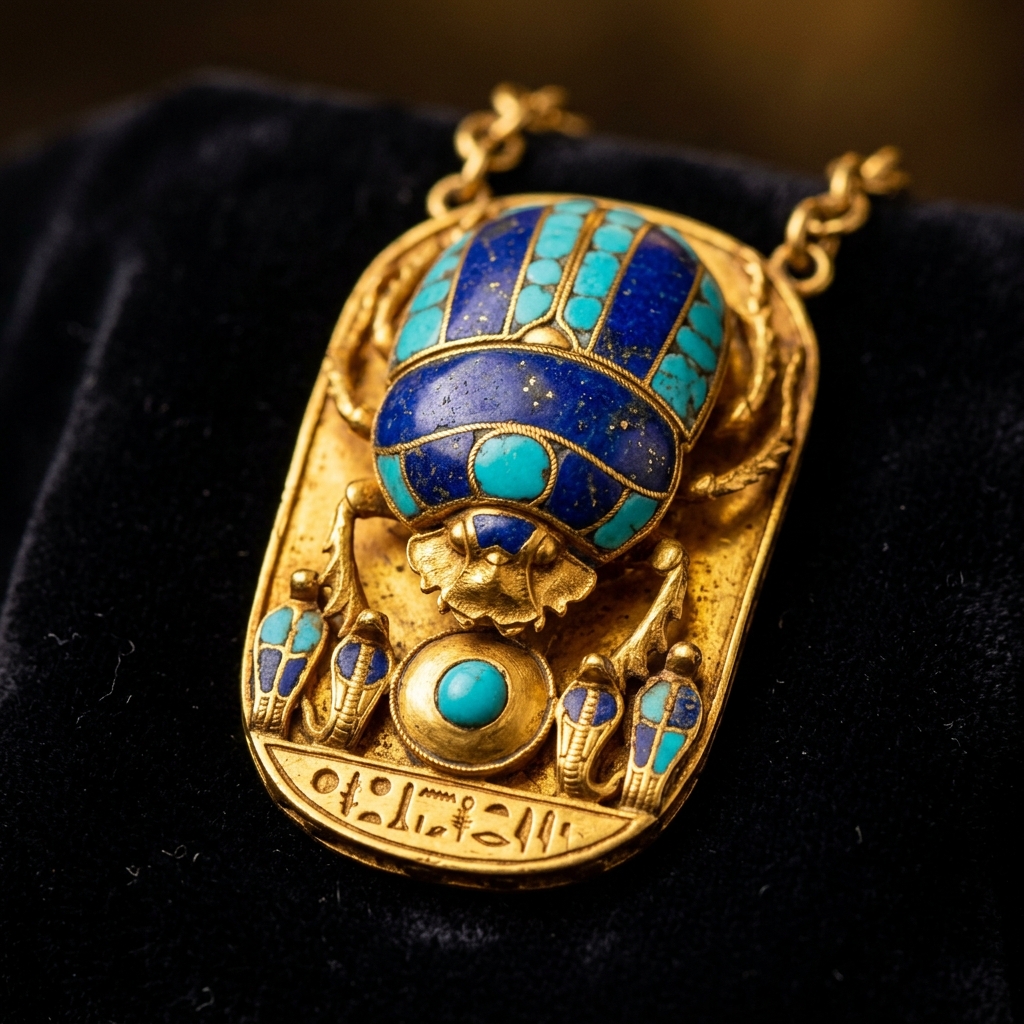
African Sodalite Silver Pendant: Gemological Optics, Namibian Provenance & 925 Sterling Metallurgy
A curatorial gemological analysis of African sodalite from Namibia's Kunene complex, examining feldspathoid crystallography, UV fluorescence, and 925 sterling silver artisan bezel architecture.
Nestled between the arid expanse of northwestern Namibia and the winding Kunene River lies one of the world's most captivating occurrences of ornamental sodalite. When secured within a hand-wrought mounting of 925 sterling silver, an African sodalite pendant transforms into an exquisite harmony of deep royal indigo, pristine white calcite marbling, and cool metallic luster. Unlike mass-manufactured costume trinkets, an authentic artisan piece demands a nuanced appreciation of both igneous mineralogy and classical silversmithing metallurgy.
Mineralogical Classification & Crystallographic Structure
Sodalite is a chlorine-bearing sodium aluminum silicate belonging to the feldspathoid mineral group, characterized by the idealized chemical formula Na8(Al6Si6O24)Cl2. Within the realm of systematic mineralogy, feldspathoids are silica-undersaturated tectosilicates that crystallize primarily from alkaline magmas depleted in free quartz. The internal architecture of sodalite conforms to the isometric (cubic) crystal system, featuring an open framework of alternating aluminate and silicate tetrahedra interconnected in a three-dimensional cage-like framework. These structural cages enclose sodium cations and chlorine anions, creating a remarkably stable yet low-density crystalline matrix.
While gem-quality crystals displaying euhedral dodecahedral forms are exceptionally rare, the mineral predominantly occurs in dense, cryptocrystalline to microcrystalline massive aggregates. Gemologists appraising African sodalite observe a characteristic vitreous to greasy luster on polished faces, paired with an uneven to conchoidal fracture. On the Mohs scale of mineral hardness, sodalite registers between 5.5 and 6.0, accompanied by a specific gravity ranging from 2.27 to 2.33. This low specific gravity provides an immediate diagnostic indicator distinguishing sodalite from lookalike lapis lazuli, which typically exhibits a substantially denser specific gravity between 2.70 and 2.90 due to the heavy presence of associated pyrite and diopside.
Gemological Diagnostic Indicator
Unlike natural lapis lazuli, which universally contains brassy spangles of metallic pyrite (FeS2), authentic African sodalite is celebrated for its vitreous royal blue matrix laced with milky white to pale cream veins of calcite (CaCO3). Furthermore, under longwave ultraviolet radiation (365 nm), Namibian sodalite from Swartbooisdrif frequently emits a diagnostic patchy orange to bright fire-orange fluorescence originating from trace ferric or sulfur-bearing activator centers within the feldspathoid lattice.
The Kunene Alkaline Complex: Namibian Geological Provenance
The primary source of Africa's premier ornamental sodalite is situated within the Kunene anorthosite complex near Swartbooisdrif in northern Namibia. Formed during the Mesoproterozoic era through protracted alkaline magmatic intrusion into ancient metamorphic host rocks, this geological formation represents one of the largest mafic-alkaline complexes on Earth. The sodalite-bearing horizons occur as nepheline-sodalite syenite dikes and pegmatitic veins cross-cutting older granitoid gneisses.
What elevates Namibian sodalite above standard deposits in Brazil, Canada, or India is its exceptional chromatic depth. The primary chromophore responsible for the mineral's mesmerizing ultramarine hue is the presence of colloidal color centers and radical anions trapped inside the aluminosilicate structural cages. In the Kunene specimens, the blue reaches a saturated, royal navy intensity that exhibits minimal muddiness. Subordinate minerals interwoven throughout the rough yield natural contrast: chalky white calcite stringers create dramatic serpentine veins, while occasional feldspathic patches impart subtle chatoyancy across the polished dome.
Metallurgy of 925 Sterling Silver in Pendant Architecture
Fine lapidary gemstones require a mounting alloy that offers the structural resilience needed to protect the stone while preserving bright, noble workability. Pure fine silver (99.9% Ag) possesses unmatched thermal conductivity and optical reflectivity, but its Vickers hardness of approximately 25 to 30 HV renders it far too ductile for everyday jewelry settings. Subjected to incidental contact, a fine silver bezel would quickly deform, releasing the gem.
To overcome this mechanical limitation, master jewelers utilize standard 925 sterling silver, an intentional metallurgical formulation consisting of 92.5% elemental silver and 7.5% base alloying elements, traditionally refined copper. The addition of copper introduces solid-solution strengthening and precipitation hardening into the face-centered cubic silver lattice, driving the alloy's annealed hardness up to 75–85 HV, and enabling work-hardened states exceeding 130 HV. This alloy provides the perfect balance of yield strength, tensile durability, and malleability required to roll an airtight, seamless bezel wall around the perimeter of an African sodalite cabochon.
| Gemological / Metallurgical Property | African Sodalite Specification | 925 Sterling Silver Setting | Curatorial Significance |
|---|---|---|---|
| Chemical / Alloy Formulation | Na8(Al6Si6O24)Cl2 (Feldspathoid) | 92.5% Ag, 7.5% Cu | Guarantees genuine mineral composition and hallmarked metal purity |
| Crystal System / Crystal Lattice | Isometric (Cubic Cage Framework) | Face-Centered Cubic (FCC) | Provides uniform isotropic optical behavior and high metal ductility |
| Hardness (Mohs / Vickers) | 5.5 – 6.0 Mohs | 75 – 130 HV (Annealed to Work-Hardened) | Requires protective bezel contouring rather than high-stress prongs |
| Refractive Index (RI) | 1.483 – 1.487 (Isotropic) | High Specular Reflectivity (>95%) | Deep vitreous color absorption paired with brilliant white precious metal framing |
| Specific Gravity / Density | 2.27 – 2.33 g/cm³ | 10.36 g/cm³ | Comfortable lightweight pendant drape anchored by solid metal backplate |
Lapidary Arts: The Smooth Cabochon Cut
Because sodalite possesses distinct dodecahedral cleavage along the {110} planes and an intermediate hardness of 5.5 to 6.0, it is seldom fashioned into faceted cuts with sharp facet junctions. Thin facet ridges would be vulnerable to micro-chipping under normal wear. Instead, lapidary artists execute high-domed oval, teardrop, or cushion cabochons. The smooth convex curvature serves two fundamental aesthetic and physical purposes:
- Maximizing Color Saturation: The gentle curvature allows ambient incident light to penetrate deep into the cryptocrystalline interior before refracting back to the observer, intensifying the rich royal blue tone.
- Highlighting Natural Calcite Veining: The broad, uninterrupted surface displays the organic marbling of white calcite and sodalite matrix without optical distortion or structural stress points.
- Stress Distribution: When setting a cabochon, the master metalsmith burnishes a continuous silver bezel rim around the stone's base. The uniform pressure distributes retention forces evenly, eliminating localized pinch points that could otherwise induce cleavage fractures.
A well-crafted pendant also features a solid or gently pierced sterling silver backplate. Beyond reinforcing the structural rigidity of the pendant, the silver backing protects the stone from direct body perspiration and skin friction, ensuring that delicate calcite veins remain unetched over generations of wear.
Curatorial Appraisal & Conservation Protocol
To preserve the pristine luster and structural integrity of an African sodalite pendant, collectors must observe strict curatorial care guidelines. Because sodalite is an acid-sensitive feldspathoid, exposure to acidic household chemicals, perfumes, chlorine pools, or harsh jewelry cleaning solvents will degrade the polished surface, turning the deep blue dull and etching the calcite inclusions.
- Safe Cleaning Procedures: Never clean sodalite jewelry in an ultrasonic tank or steam cleaner. High-frequency ultrasonic vibrations can exploit micro-fissures in the natural stone, while thermal shock can cause immediate cleavage separation. Clean exclusively using lukewarm distilled water, a drop of mild neutral soap, and a soft-bristled camel-hair brush. Dry thoroughly with a lint-free cotton cloth.
- Tarnish Management for Sterling Silver: Because the copper component of 925 silver reacts over time with airborne sulfur compounds to create silver sulfide (tarnish), use a dedicated non-abrasive jewelry polishing cloth to buff the silver bezel and bail. Avoid immersion liquid silver dips, as the aggressive thiourea and mineral acids in chemical dips will immediately bleach and damage the sodalite.
- Storage Architecture: Store the pendant in an individual velvet-lined pouch or compartmentalized jewelry box. Storing sodalite loose alongside harder gemstones like quartz (Mohs 7), topaz (Mohs 8), or diamonds (Mohs 10) will inevitably lead to surface scratches.
Frequently Asked Questions
How does a gemologist distinguish African sodalite from natural lapis lazuli?
The most immediate visual distinction is the complete absence of golden brassy pyrite flakes in sodalite, combined with the presence of translucent white calcite banding. In a laboratory setting, gemologists measure the refractive index (1.483–1.487 for sodalite versus approximately 1.50 for lapis) and specific gravity (2.27–2.33 for sodalite versus 2.70–2.90 for lapis). Furthermore, African sodalite typically exhibits a patchy orange-red fluorescence under longwave ultraviolet light, whereas lapis displays a chalky greenish-white or dull inert reaction with yellow fluorescence restricted to associated calcite.
Why is 925 sterling silver preferred over 999 fine silver for pendant mountings?
Fine silver (99.9% purity) is excessively soft, with an annealed hardness of merely 25 to 30 HV. In a pendant setting, a fine silver bezel wall would bend or warp during everyday movement, risking the accidental loss of the stone. Alloying 92.5% silver with 7.5% copper increases the metal's hardness to 75–130 HV, granting the bezel wall the tensile stiffness and elastic retention needed to grip the gemstone securely while retaining sufficient ductility to burnish smooth, gap-free borders.
Can an African sodalite pendant be worn as an everyday signature piece?
Yes, provided the pendant is crafted with a protective bezel mounting and solid backplate. Because pendants rest against the neckline rather than enduring the heavy impact and abrasive wear encountered by rings and bracelets, a stone of Mohs 5.5–6.0 is exceptionally well protected. As long as the wearer avoids showering, swimming, or applying perfumes while wearing the piece, it will retain its vivid color and high polish for decades.
Royal Adornments & Historical Gemology Curatorial Board
Our curatorial panel researches historical royal provenance, antique lapidary cuts, precious metal hallmarking archives, and scientific gemological origins.
Researching Antique Jewelry Provenance?
Consult our historical hallmark archives, period maker records, and gemological monograph collection.